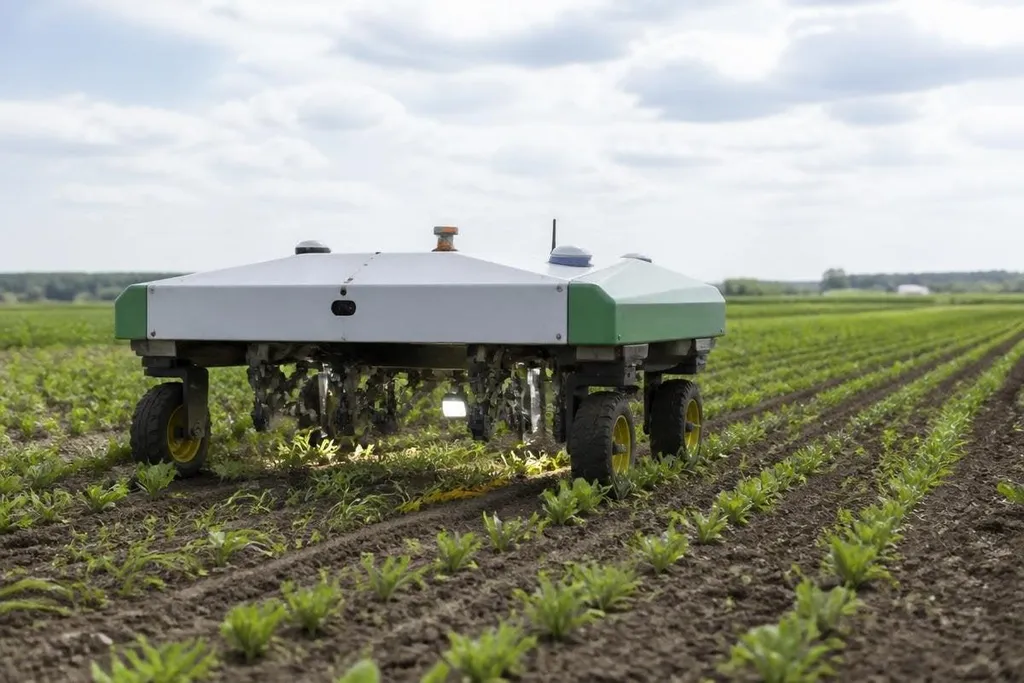
A weeding robot moves through crop rows, finds plants that do not belong, and removes them without treating the whole field. That can cut hand labor and chemical use, but the robot still has to tell a weed from a crop under changing light, soil, and weather.
- Camera-guided robots inspect plants one row at a time
- Mechanical tools can remove weeds close to crops
- Mud, shadows, crop growth, and missed plants remain hard problems
How the machines remove weeds
Most weeding robots use cameras to find the crop line and identify plant shapes. Software then sends a position to a tool, which may cut, pull, bury, or disturb the soil around the weed.
The machine may use a narrow blade, a finger-like tool, or a small actuator that moves between crop plants. The tool has to reach the weed without touching the crop, so row spacing and plant position matter.
Some systems also use targeted spraying. Instead of covering a full strip, the robot applies a small amount of herbicide to selected plants. That can reduce chemical use, but it still depends on correct plant recognition and accurate tool movement.
The robot's speed creates a trade-off. Moving faster lets one machine cover more ground, but the camera has less time to inspect each plant and the tool has less time to move into position.
Where they can help
A weeding robot can work close to crops that are hard to treat with a large tractor. It may also return to the same rows and remove small weeds before they grow large enough to compete for water, light, and soil nutrients.
That timing matters for farms with limited labor. A robot can repeat a narrow task for long periods, so workers can spend more time on jobs that still need judgment or hands-on work.
Mechanical weeding can reduce reliance on herbicide in fields where the crop layout allows accurate tool movement. The benefit depends on the crop, soil, row design, and weed types. A system made for straight rows may struggle in beds with irregular planting.
As it works, the robot also records images and movement data. Those records can help a farm see missed areas, track weed pressure, and check how conditions change across a field. The data only helps if someone reviews it and acts on the result.
A weeding claim needs the crop, row spacing, treatment rate, test date, and human checks behind it. Agricultural robotics reporting from Robot24.com can place those details beside the machine's result. That record sets up the next question: where can the robot fail or create risk during daily field work?
Where the risks sit
Plant recognition is the main source of failure. Young crops and young weeds can share similar shapes, and leaves may overlap when plants grow. Dust, glare, rain, shadows, and damaged leaves can make the image harder to read.
A missed weed may keep growing. A mistaken cut can damage the crop, reduce the harvest, or force a worker to inspect the row by hand. That means a high machine count does not fix poor detection.
Ground conditions create another problem. Soft soil can make wheels slip, while stones and plant waste can block a tool. One that works well on a clean test row may need slower movement and more checks in a working field.
Safety also needs a clear plan. The machine must detect people, animals, vehicles, and objects in its path. Farms need rules for charging, maintenance, remote control, emergency stops, and work near other equipment.
Cost is harder to judge than the purchase price. You also need to count setup, software, repairs, spare tools, batteries, supervision, and the work needed when the robot misses plants.
I’d treat any payback claim as unfinished until it includes those costs and a full growing season.
A practical buying check
Use these checks before a farm trial:
- Name the crop: Confirm the robot was built for your crop layout and plant size.
- Test the ground: Run it on the soil, slopes, residue, and row widths found on your farm.
- Measure misses: Count damaged crops and missed weeds, not only machine hours.
- Check the safety plan: Ask how the robot stops near people, animals, and vehicles.
- Price the support: Include tools, batteries, repairs, software, supervision, and training.
- Set a human fallback: Decide who checks the rows and fixes missed work.
The best trial has a defined area, a clear weed count, and a worker who checks the robot's results. A robot that removes fewer weeds than expected can still look busy all day; the crop tells you if the work mattered.
Weeding robots are useful when the field is prepared for them and the task is narrow enough to measure. The open question is whether each farm can keep detection accuracy high after weather, crop growth, and soil conditions change.